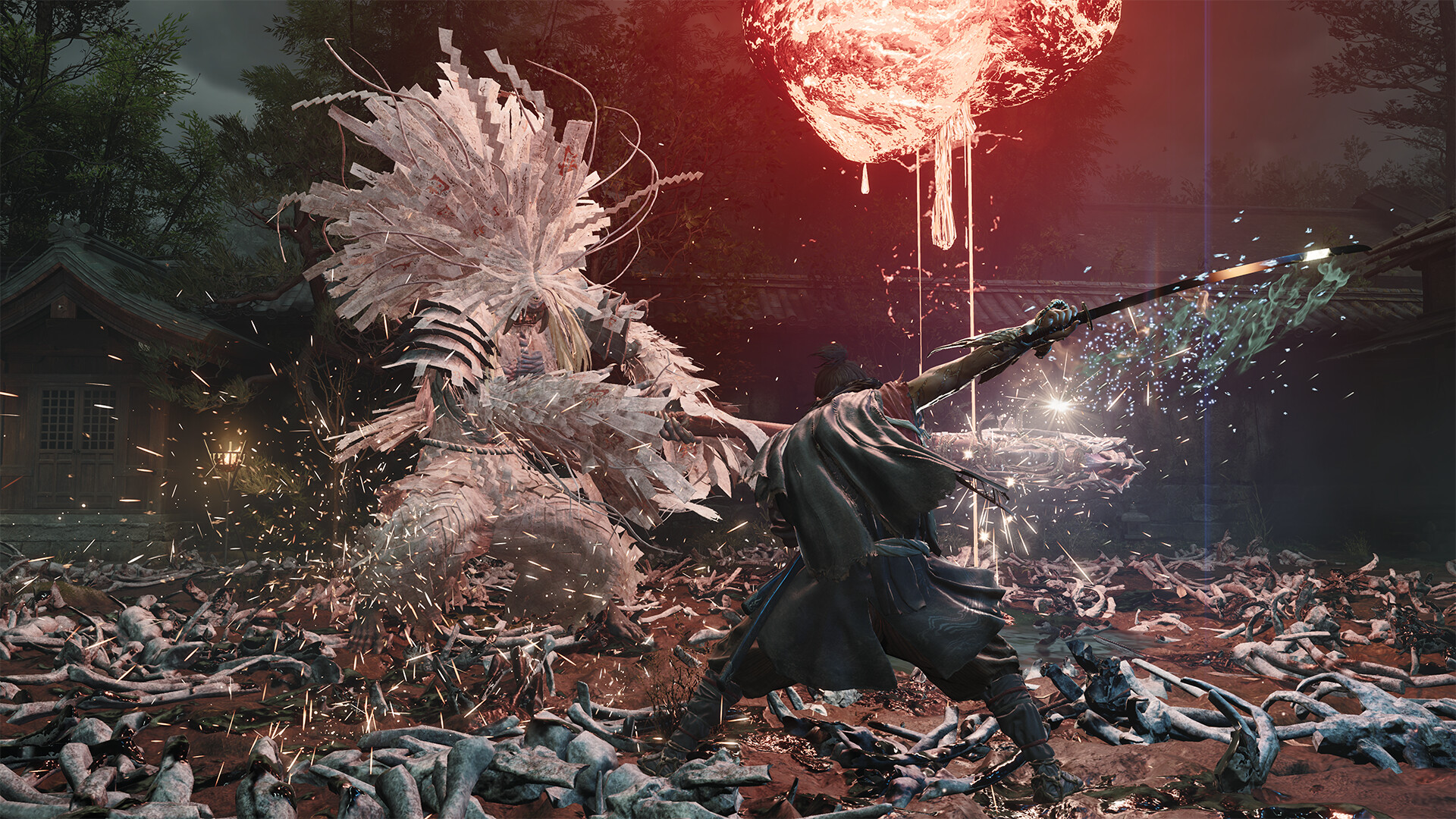
Six answers, six intentions.
| Action | Primary job | Use it when | Cost of failure |
|---|---|---|---|
| Block | Survive a readable string | You need information more than reward | Pressure and resource cost can continue |
| Parry | Time guard as the blow lands; power up your sword | You want a safer timed defense that strengthens the punish | Mistiming loses the stable block |
| Deflect | Guard plus attack to knock the foe off balance and damage stamina | You want to build toward a stamina break | Requires a deliberate two-button response |
| Issen | Attack just before contact for a high-damage counter | The cue is learned and the reward justifies direct risk | Mistiming can mean taking the hit |
| Issen Break | Execute after enemy stamina is depleted | Deflect pressure has created the vulnerable state | It is unavailable before the break state |
| Dodge | Leave the line and change geometry | Position matters more than contesting the blade | Poor direction can preserve the threat |
Button labels and controller layout can differ by platform and user mapping. This page owns the decision model; the in-game control screen owns the current input.
A 10-minute training ladder
- Block and watch. Spend two minutes identifying the enemy’s release cue without seeking damage.
- Add one active defense. Practice either Parry or Deflect for several repetitions; do not alternate randomly.
- Move the timing later. Convert a known cue into Issen attempts only after you can predict the contact point.
- Attach soul absorption. After the counter, collect promptly and reset instead of extending automatically.
Why “I parried, but it did not count” happens
Parry uses a timed guard; Issen uses your attack just before the enemy would hit. They are different inputs and outcomes. If you are pursuing the demo’s reported ten-Issen condition, use the visible counter as the result check and continue to the Special Challenge guide.
Oni tools and the core loop
Official previews also identify the Oni Armament and the act of absorbing souls as central tools. Treat them as part of a loop—read, defend, punish, absorb, reset—not as disconnected cooldowns. Exact retail balance and complete upgrade paths remain outside this pre-release guide.
Story or Action difficulty?
The public demo provides Story and Action options. Choose Action when you want the timing test as presented; choose Story when you want lower friction while learning the route. The developers have said the final game will present a broader challenge, so the demo is not a final difficulty verdict.